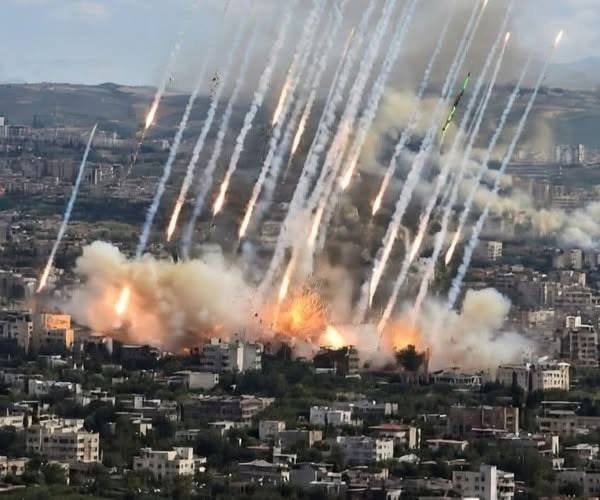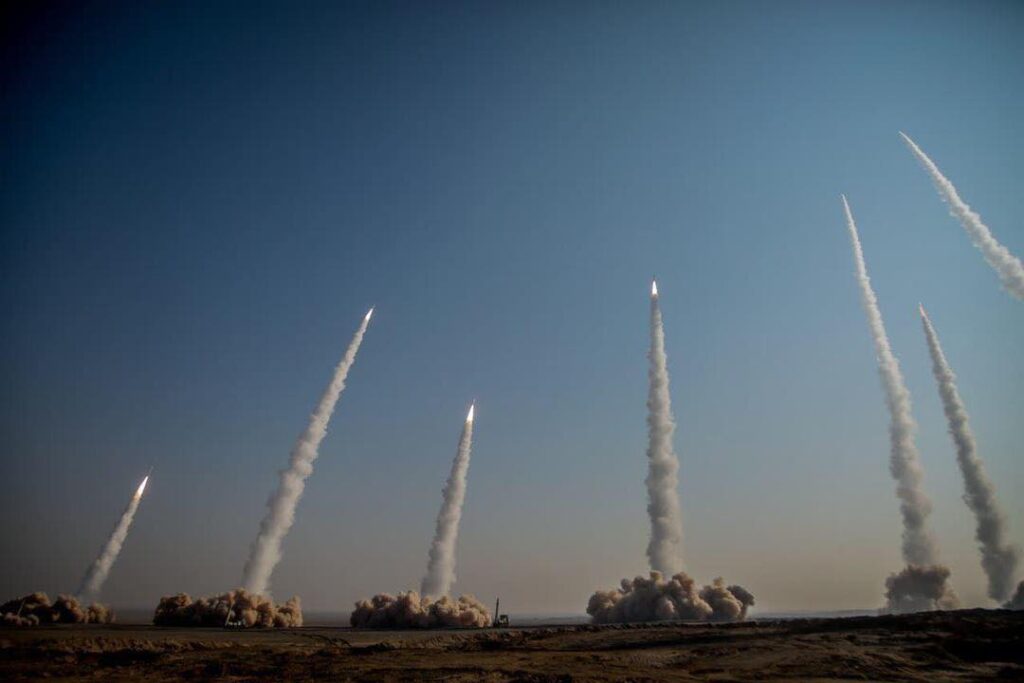
The stillness of the afternoon was shattered in a matter of seconds, as a series of deafening explosions tore through the skyline, sending shockwaves rippling across the densely populated urban center. What had moments earlier been a scene of routine daily life—families in their homes, workers in offices, children walking along crowded streets—was instantly transformed into chaos and fear. Thick columns of smoke spiraled into the sky, darkening the horizon, while the unmistakable echoes of destruction reverberated through every corner of the city.
Eyewitnesses described a terrifying sequence: first, a sharp, almost piercing whistle cutting through the air, followed by thunderous impacts that seemed to arrive all at once. Buildings trembled under the force, windows shattered outward, and debris scattered across roads and sidewalks. Within moments, emergency sirens began wailing, their urgency underscoring the magnitude of what had just unfolded. First responders raced toward the devastation, navigating streets now clogged with rubble, overturned vehicles, and panicked civilians trying desperately to escape the danger.
As confusion gripped the region, communication networks became overwhelmed. Phone lines jammed, social media platforms flooded with frantic posts, and local authorities struggled to piece together an accurate picture of the unfolding crisis. Early reports indicated multiple strike points across both residential neighborhoods and key infrastructure sites, raising fears about the scale and intent of the attack. Hospitals quickly activated emergency protocols, bracing for an influx of injured victims as ambulances streamed in from all directions.
In the midst of the growing uncertainty, former U.S. President Donald Trump released a brief but somber statement, confirming the passing of an individual connected to the incident. While details remain limited and officials have yet to release a full account, his confirmation added a new layer of gravity to an already dire situation. The identity of the individual and the circumstances surrounding their death are expected to be clarified as authorities continue their investigation.
On the ground, the human toll is becoming increasingly apparent. Survivors, many visibly shaken, recounted scenes of confusion and heartbreak. Some spoke of narrowly escaping collapsing structures, while others described the desperate search for loved ones in the aftermath. Rescue teams have been working tirelessly, combing through debris in hopes of locating those who may still be trapped. The scale of the destruction suggests that recovery efforts could take days, if not longer.
Officials have urged residents to remain indoors and avoid affected areas, warning that the situation remains volatile. There are concerns about potential secondary hazards, including structural collapses and unexploded ordnance. Meanwhile, international observers are closely monitoring developments, as the incident has already sparked widespread concern about regional stability and the possibility of further escalation.
As the dust slowly begins to settle, questions loom large. Who was responsible for the strikes? What was the intended target? And perhaps most urgently, how many lives have been irrevocably altered by the events of this single, devastating afternoon? Authorities have promised a full investigation, but for now, answers remain elusive.
What is clear, however, is that the impact of this moment will be felt far beyond the immediate scene of destruction. For those who lived through it, the echoes of the explosions—and the memories of what followed—will linger long after the smoke has cleared.