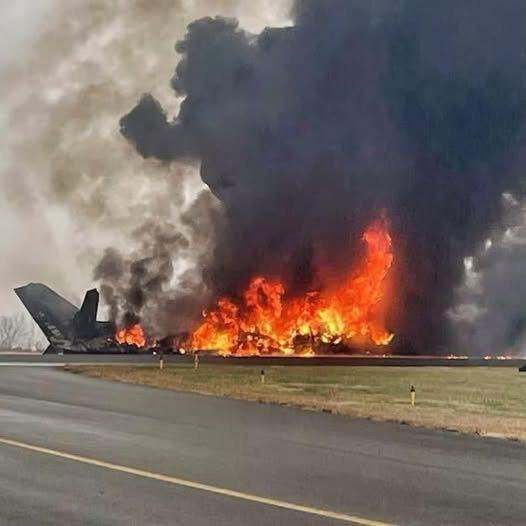
A serious aviation incident in Louisville, Kentucky, has prompted an ongoing federal investigation and a large-scale emergency response. Authorities continue to gather information following a cargo aircraft accident at Louisville Muhammad Ali International Airport, where multiple casualties and injuries have been confirmed.
Officials have now shifted from immediate rescue efforts to recovery and analysis, as teams work to determine what led to the event and how similar incidents can be prevented in the future.
The accident occurred late Tuesday afternoon, at approximately 5:15 p.m., during a scheduled departure. The aircraft involved was a cargo plane operated by UPS, reportedly en route to Honolulu, Hawaii.
According to early reports from aviation authorities, the aircraft experienced a critical issue during takeoff. Witnesses described seeing the plane struggle to gain proper altitude before descending near the runway area.
The aircraft was carrying standard freight along with a substantial fuel load, which contributed to post-incident fire conditions. The presence of fuel intensified the situation and made initial emergency operations more complex.
First responders arrived at the scene within minutes of the incident. Multiple agencies coordinated efforts to contain fires, assist survivors, and secure the surrounding area.
Local fire and emergency medical services
Nearby industrial buildings sustained damage, prompting evacuations and additional safety precautions. Emergency crews worked through challenging conditions, including heat, smoke, and structural hazards.
By late evening, officials confirmed that all active fires had been brought under control.
Authorities have confirmed that the three crew members on board the aircraft lost their lives. Additional fatalities were reported in the surrounding area, bringing the total number of confirmed deaths to at least 14.
Several individuals were transported to hospitals for treatment
A number of individuals were initially unaccounted for
Family assistance services were quickly established to support loved ones seeking information and guidance. Crisis counselors and support teams remain available to those affected.
Following the incident, operations at Louisville Muhammad Ali International Airport were temporarily suspended. This included delays and cancellations affecting both cargo and passenger flights.
Travelers are still advised to check flight status before heading to the airport
Airport officials emphasized that safety inspections are ongoing and that full operations will only resume once all conditions meet strict aviation standards.
The investigation is being led by the National Transportation Safety Board (NTSB) in coordination with the Federal Aviation Administration (FAA).
Recovery of flight data and cockpit voice recorders
The aircraft’s “black boxes” have already been recovered and transported to a specialized lab for detailed analysis.
Investigators caution that determining an official cause will take time, often several months or longer. Aviation incidents require careful, methodical review to ensure accuracy.
Preliminary flight tracking data suggests the aircraft reached a moderate speed during takeoff but remained at a relatively low altitude before the incident occurred.
While this information offers some context, experts stress that it is far too early to draw conclusions. Many factors must be considered, including:
Only after thorough analysis will investigators release formal findings.
State leadership responded quickly following the incident. A state of emergency was declared to help mobilize resources and support recovery efforts.
Emergency funding has been made available to assist with:
Local officials, along with federal representatives, have expressed condolences and emphasized the importance of relying on verified information rather than speculation.
Given the scale of the incident and the presence of aviation fuel, environmental teams were deployed to assess potential risks.
So far, early reports indicate that air quality levels remain within safe limits, and local water systems have not been affected.
Cleanup crews continue working carefully to remove debris while minimizing environmental impact.
Although the incident occurred in an industrial area, the effects were felt across the broader Louisville community.
Local businesses near the site experienced damage, and recovery efforts are underway to restore operations.
Community organizations and faith groups have begun organizing support initiatives, including memorial services and assistance programs for affected families.
UPS, which operates a major global hub in Louisville, released a statement expressing deep sympathy for those affected. The company has committed to cooperating fully with investigators.
As a precaution, internal safety reviews are being conducted across similar aircraft in its fleet. At this time, there is no confirmed indication of a broader issue affecting other planes.
Aviation experts note that such reviews are standard practice following serious incidents.
As emergency conditions stabilized, operations transitioned into recovery mode. This phase involves:
Officials have acknowledged that hopes for additional rescues have diminished, and the focus is now on accountability, investigation, and healing.
Support services remain available for both families and first responders, many of whom faced emotionally challenging conditions.
A full investigation by the NTSB typically takes between 12 and 18 months. During this time, experts will reconstruct the sequence of events leading up to the incident.
These findings often lead to improvements in aviation safety standards, helping prevent similar events in the future.
For the Louisville community, the path forward will involve both rebuilding and remembrance.
Moments like this often bring communities together, highlighting resilience and collective support during difficult times.
While aviation remains one of the safest forms of transportation globally, incidents like this underscore the importance of continuous improvement.
The lessons learned from this event will likely influence future practices across the aviation industry.
The cargo plane accident in Louisville represents a deeply serious event that has affected families, responders, and the wider community. While many questions remain unanswered, investigators are working carefully to understand exactly what happened.
As the process continues, the focus remains on accuracy, accountability, and support for those impacted.
In time, the findings from this investigation will not only provide answers but also contribute to safer skies for everyone.
In the days following the incident, support systems have become a critical part of the recovery process. Local organizations, counseling services, and community groups are working together to provide assistance to those impacted—both directly and indirectly.
Grief support services have been made available for families who lost loved ones, as well as for witnesses and first responders who experienced the event firsthand. Situations like this can leave lasting emotional effects, and access to professional guidance plays an important role in long-term recovery.
In addition, community-led initiatives have begun organizing donation drives and assistance programs. These efforts aim to help individuals facing unexpected financial burdens, such as medical expenses or temporary displacement due to property damage.
The response from emergency personnel has been widely recognized as swift and coordinated. Firefighters, paramedics, and law enforcement officers worked under intense pressure to manage the situation safely and efficiently.
Securing the area to prevent further risk
Many of these responders remained on-site for extended hours, navigating hazardous conditions while prioritizing public safety. Their efforts highlight the importance of preparedness and training in emergency situations.
Events like this often leave a lasting mark on a community, but they can also bring people together in meaningful ways. In Louisville, residents have shown resilience by supporting one another, sharing resources, and offering help where it’s needed most.
Local leaders have emphasized the importance of unity during this time, encouraging residents to rely on verified information and to look out for one another. Schools, workplaces, and community centers have also taken steps to provide additional support and flexibility for those affected.
While the investigation continues, attention will gradually shift toward long-term recovery and rebuilding. This includes restoring damaged properties, supporting local businesses, and ensuring that affected families receive the help they need.
At the same time, the aviation industry will closely monitor the findings of the investigation. Each incident provides an opportunity to improve safety measures and prevent future occurrences.
Although the road ahead may be challenging, the combined efforts of investigators, officials, and the community offer a path forward grounded in resilience, support, and a commitment to learning from the past.